
Overview of the Event
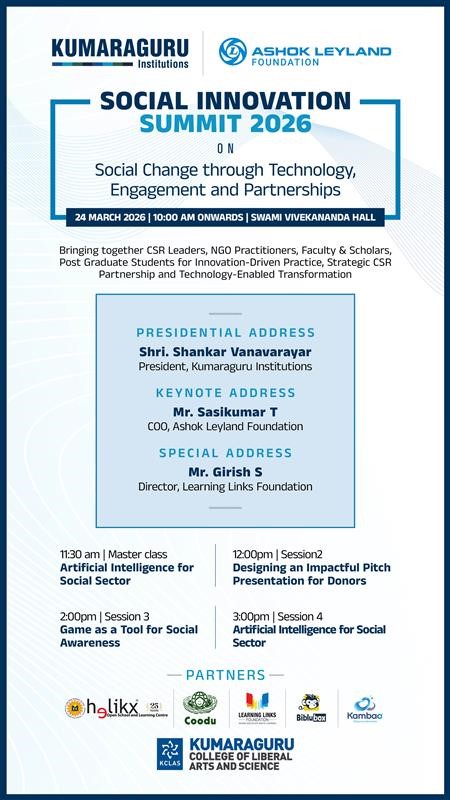
The Social Innovation Summit 2026, held on 24 March 2026 at Swami Vivekananda Hall, was organized by Kumaraguru Institutions in association with the Ashok Leyland Foundation. The summit revolved around the theme “Social Change through Technology, Engagement and Partnerships” and brought together CSR leaders, NGO practitioners, academicians, and students.
The Summit :
- Highlighted the role of technology in driving social development
- Explored Corporate Social Responsibility (CSR) initiatives and collaborations
- Introduced the fundamentals and applications of Artificial Intelligence
- Encouraged innovation and active community engagement
In the special address by Mr. Girish, the significance of collaboration in social innovation was strongly emphasized. Key aspects of
- Developing strong and impactful partnership proposals
- Engaging closely with communities
- Adopting a strategic and sustainable approach to innovation
- Strengthening collaboration among organizations for greater social impact
were also included.
Key Highlights and Insights
Leadership Perspectives and Keynote Sessions
The inaugural and keynote sessions emphasized the increasing importance of structured CSR initiatives and the growing demand for skilled professionals in the social sector. A notable suggestion was the establishment of a Centre of Excellence in Social Development to promote impactful practices and research. Speakers also stressed the importance of providing students with opportunities to participate in real-world social projects, thereby bridging the gap between academic learning and practical application.
Understanding Artificial Intelligence
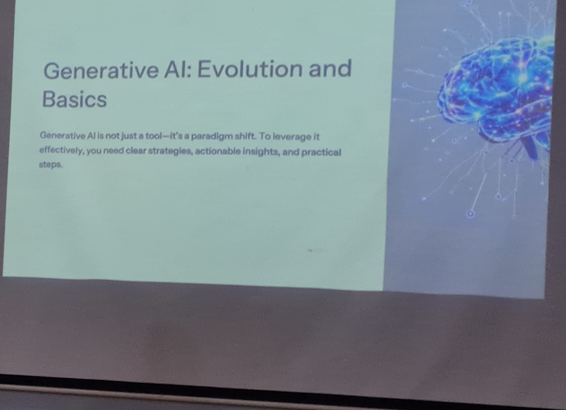
A special session on Generative AI – Evolution and Basics, delivered by Mr. Jegan, provided valuable insights into the development and application of AI.
CSR and Social Development Initiatives
Insights shared by Mr. T. Sasikumar, Chief Operating Officer, Ashok Leyland Foundation highlighted the increasing organization and legal structuring of CSR activities. The discussions focused on the need for capacity building through education and training, as well as the importance of qualified professionals to effectively manage social impact initiatives.
Learning and Outreach Programs
The summit also showcased various learning and development initiatives, including faculty development programs and farmer-centric approaches such as 360° development models. These initiatives aim to enhance skills, expand knowledge, and improve outreach in rural and underserved communities.
Key takeaways included:
- The evolution of AI from its early stages in the 1950s to modern advancements
- The capability of AI to process multiple formats such as text, images, and videos
- The importance of effective prompting in obtaining meaningful AI outputs
- The need for ethical and responsible use of AI
- Practical applications of AI in project management and problem-solving
Conclusion
The Social Innovation Summit 2026 provided valuable insights into the integration of technology with social development. While the theme extended beyond my core academic specialization, the experience enriched my understanding of AI applications in real-world contexts, particularly in project management.
The summit reinforced the importance of ethical practices, collaboration, and innovation in driving meaningful and sustainable social change.
Report By Dr. P. Thiruselvi
Assistant Professor
Michael Job Memorial College of Education for Women